1. Was Mark Twain's description of the Gilded Age accurate?
2. What were the two most prominent national political issues during the Gilded Age?
3. How did political bosses like Blaine and Conkling run the government?
4. Why was patronage so important to both political parties?
5. Why was voter turnout so high during the latter part of the 19th century?
6. How did the silver issue affect the distribution of currency?
7. How did regional interests play into issues like civil service reform, silver coinage, tariff protection, etc.?
8. How did local politics transform national politics?
9. What kind of perks did local party bosses offer in exchange for votes?
10. What made political races so enticing during the 1880s and 90s?
11. How did Carnegie's idea of social order/hierarchy compare to that of 'social Christians'?
12. What connections did various social commentators make between wealth and poverty?
13. What best describes the idea of a 'social gospel'?
14. How did local party bosses control local utilities like street cars and electricity?
15. How did religion play a role in the advocacy for mandatory public education?
16. What three things did women reformers focus on by the end of the 19th century?
17. What factors do you think contributed to women not being allowed to vote, even by 1900?
Thursday, June 10, 2010

Wednesday, May 26, 2010
Lincoln's Second Inaugural Address
After reading Lincoln's second inaugural address, to what extent did he allude to his possible plans for the post-war United States? Also, how did this speech reflect or compare to his first inaugural address?
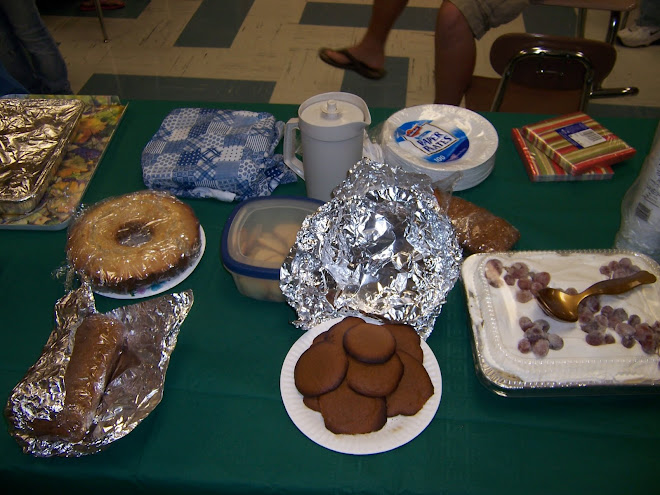
Check your class notes regarding his first inaugural speech and his views on the secession of the South for further reference. In addition, if you want to read the actual first inaugural address, it can be found at http://www.apstudent.com/ by clicking on the 'documents' link. Post two comments, the first being your answer to the questions asked, and the second a response to your classmates. We will have a further discussion about this on Friday during our Civil War Food Day.
Check your class notes regarding his first inaugural speech and his views on the secession of the South for further reference. In addition, if you want to read the actual first inaugural address, it can be found at http://www.apstudent.com/ by clicking on the 'documents' link. Post two comments, the first being your answer to the questions asked, and the second a response to your classmates. We will have a further discussion about this on Friday during our Civil War Food Day.
Tuesday, May 11, 2010
Lincoln's decisions
After our discussion in class, your textbook readings, or further research, post three comments on the following prompt... Argue for/against: Abraham Lincoln's status as one of the greatest Presidents is undermined by his attacks on civil liberties and other borderline constitutional war policies.
Wednesday, May 5, 2010
Advent of the Civil War
After reading pages 502-504 and 510-515, do you feel Lincoln responded appropriately to the circumstances in which he took office (secession, push towards war, etc.)? Of course explain your answer giving as many specific details as possible. Post two comments, the first being your answer to the question, and the second a response to your classmates. Enjoy!!!
Tuesday, May 4, 2010
Secession
After reading the FTR selections, to what extent do you think the Civil War was inevitable, especially given the reasons for secession and the seemingly unrelenting tensions that mounted during the 1850s? Post two comments...
Friday, February 26, 2010
Post Civil War industry packet
While you read the post CW industrial development packet, in what ways was pre-Civil War industry different than post Civil War industry? Come up with at least two differences, and post them here on the blog. In addition, post a second comment that responds to your classmates. Hope you enjoy your long weekend!
Wednesday, February 24, 2010
Economic development in the South
1. What led to the decline of tobacco as the leading source of income for the South?
2. How was the production of cotton linked to westward expansion?
3. Why were sugar, long staple cotton, and tobacco not as profitable as short staple cotton?
4. What role did "factors" play in the economy of the South?
5. Why did railroad expansion in the South not lead to the economic boom it caused in the North?
6. How is "De Bow's Review" an example of the economic subordination of the South to the North?
7. What factors led the North and South to go, economically speaking, in two different directions?
2. How was the production of cotton linked to westward expansion?
3. Why were sugar, long staple cotton, and tobacco not as profitable as short staple cotton?
4. What role did "factors" play in the economy of the South?
5. Why did railroad expansion in the South not lead to the economic boom it caused in the North?
6. How is "De Bow's Review" an example of the economic subordination of the South to the North?
7. What factors led the North and South to go, economically speaking, in two different directions?
Tuesday, February 2, 2010
Expansionism
Post two responses to the following prompt: The desire for expansion into the west/southwest completely disregarded any possible consequences that would stem from actually acquiring the land.
Be clear in your stance, and use the days you have to come up with a good response
Be clear in your stance, and use the days you have to come up with a good response
Wednesday, January 20, 2010
Jackson
After discussing Jackson's dealings with the Native Americans and the Nullification crisis, post two comments on the following questions... your first post will be your answers, and the second will be a response to your classmates.
1. analyze how Jackson dealt with conflict, whether it economic, political, or in policy decisions. Give examples
2. compare Jackson's presidency to that of his predecessors in terms of exercising the powers of office
1. analyze how Jackson dealt with conflict, whether it economic, political, or in policy decisions. Give examples
2. compare Jackson's presidency to that of his predecessors in terms of exercising the powers of office
Wednesday, December 9, 2009
Monday, December 7, 2009
Jefferson
After our discussions about Jefferson's presidency, is it fair to call him a hypcrite? Post two comments, one your answer/opinion on the matter, and a second in response to your classmates.
Wednesday, November 18, 2009
Washington's Presidency
After perusing pages 258-274, answer the following questions based on the reading. In addition to answering the questions, feel free to post any observations that you made while reading this section. Post two comments on the blog, the first being your answers and the second in response to your classmates.
1. How did Hamilton's economic plans (not including the national bank) reflect his assertion that the Constitution was not 'high toned enough.'?
2. Create a chart that summarizes the strengths and criticisms of Hamilton's plan
3. Despite its passage in Congress, why did the debate over assumption and funding not cease?
4. How did the Whiskey Rebellion relate to the growth of the national government?
5. Why did the French Revolution present a serious test for the United States?
6. How did the French Revolution affect ordinary people in the United States?
7. Overall, evaluate the political climate that formed during Washington's presidency.
1. How did Hamilton's economic plans (not including the national bank) reflect his assertion that the Constitution was not 'high toned enough.'?
2. Create a chart that summarizes the strengths and criticisms of Hamilton's plan
3. Despite its passage in Congress, why did the debate over assumption and funding not cease?
4. How did the Whiskey Rebellion relate to the growth of the national government?
5. Why did the French Revolution present a serious test for the United States?
6. How did the French Revolution affect ordinary people in the United States?
7. Overall, evaluate the political climate that formed during Washington's presidency.
Monday, November 2, 2009
Federalist 10 and 51
Hello there, for your reading you will write a one page response to the following questions:
1. What did Madison mean by 'factions'? In what ways are factions present today?
2. In Federalist 51, what did Madison present as the most efficient way of governing the nation? How did his way address his thesis in No. 10?
Additionally, you will be required to write at least three solid comments on the blog over the course of the next week, either stating some observations you made while writing your response, reading the documents, or responding to a classmate's comment. Of course appropriate grammar is expected and respect your fellow classmates! Have fun...
1. What did Madison mean by 'factions'? In what ways are factions present today?
2. In Federalist 51, what did Madison present as the most efficient way of governing the nation? How did his way address his thesis in No. 10?
Additionally, you will be required to write at least three solid comments on the blog over the course of the next week, either stating some observations you made while writing your response, reading the documents, or responding to a classmate's comment. Of course appropriate grammar is expected and respect your fellow classmates! Have fun...
Tuesday, October 20, 2009
Critical Period
Respond to the following prompt... despite the number of 'cons' to the Articles of Confederation, did it provide a stable form of government for the period in which it was in effect?
Post two comments...
Post two comments...
Thursday, October 1, 2009
Colonial Resistance
After completing our discussion about colonial dissent today, it's important that you focus on the initial do now question from two days ago: to what extent did social class and geography affect one's feelings towards Britain during the 1760's/70's? If you were to add gender to that question, what would you say? Post two comments, one a good solid answer to the question, and a second that is in response to your classmates.
Wednesday, September 23, 2009
Colonial Resistance
After our initial discussion in class, as well as your readings in the textbook, how has your viewpoint changed, if at all, about the issue of colonial grievances against the British? Post two comments, the first sharing how your viewpoint before class compared to it after, and the second a response to your classmates. Feel free to post more than two comments if necessary.
Friday, September 18, 2009
Last of the Mohicans open blog
During the course of the next two nights, post at least three comments in regards to the film Last of the Mohicans. While a fictional tale, the film nevertheless offers a somewhat accurate portrayal of the period you are learning about. In your posts, explain how the film addresses any of the issues that we've either discussed in class or you've read in the textbook, namely the military and relationship ones. Be specific in your examples. As always, be sure to comment on your classmates' observations.
Wednesday, September 16, 2009
essay topic
Here is your short essay assignment: In one page or less, prove how British mercantilist interests played a role both during and after the French and Indian War. Give at least two supporting examples that support your thesis.
Friday, September 11, 2009
French and Indian War
For this assignment, post two comments about the following question. Your first comment will be your answer to the question, and the second will be in response to your classmates.
After our initial discussion in class, what military, financial, and relationship issues that arose during the French and Indian War affected future events the most? Choose one answer for each of the categories listed in the question. In choosing your answer, be sure to include valid points that support your stance.
After our initial discussion in class, what military, financial, and relationship issues that arose during the French and Indian War affected future events the most? Choose one answer for each of the categories listed in the question. In choosing your answer, be sure to include valid points that support your stance.
Thursday, September 10, 2009
Discussion questions for pp. 162-172
Answer the following questions as you read the section:
1. How did the English Parliament affect the economic development of the colonies?
2. What initiated most of the conflicts that arose in the interior portions of North America?
3. Why did early British efforts to gain portions of the frontier fail?
4. How did the British war effort before William Pitt's tenure as British secretary of state compare afterwards?
5. What finally turned the tide of battle in the British's favor?
6. Agree/disagree: the removal of the French from North America only emboldened Great Britain to tighten their grip on the colonies.
7. In what ways did the war affect how the colonists and British viewed each other?
8. While Pitt's decisions enabled Britain to win the French and Indian War, did they account for long term consquences? How/how not?
1. How did the English Parliament affect the economic development of the colonies?
2. What initiated most of the conflicts that arose in the interior portions of North America?
3. Why did early British efforts to gain portions of the frontier fail?
4. How did the British war effort before William Pitt's tenure as British secretary of state compare afterwards?
5. What finally turned the tide of battle in the British's favor?
6. Agree/disagree: the removal of the French from North America only emboldened Great Britain to tighten their grip on the colonies.
7. In what ways did the war affect how the colonists and British viewed each other?
8. While Pitt's decisions enabled Britain to win the French and Indian War, did they account for long term consquences? How/how not?
Subscribe to:
Posts (Atom)